

The Difference Between Sadness and Depression: Signs Most People Miss
You had a rough week. You cancelled plans, cried more than usual, and couldn't shake the feeling that something was wrong. Then comes the question that stops a lot of people: "Am I just sad, or is this something more?"
Most people use the words interchangeably. But sadness and depression are fundamentally different - in how long they last, how they affect daily life, and what they actually need from you. Getting this distinction wrong doesn't just cause confusion. It can delay care that genuinely helps.
This post walks through the real difference between sadness and depression - including the signs most people miss - so you can understand what you're experiencing and decide what, if anything, to do about it.
What Sadness Actually Is
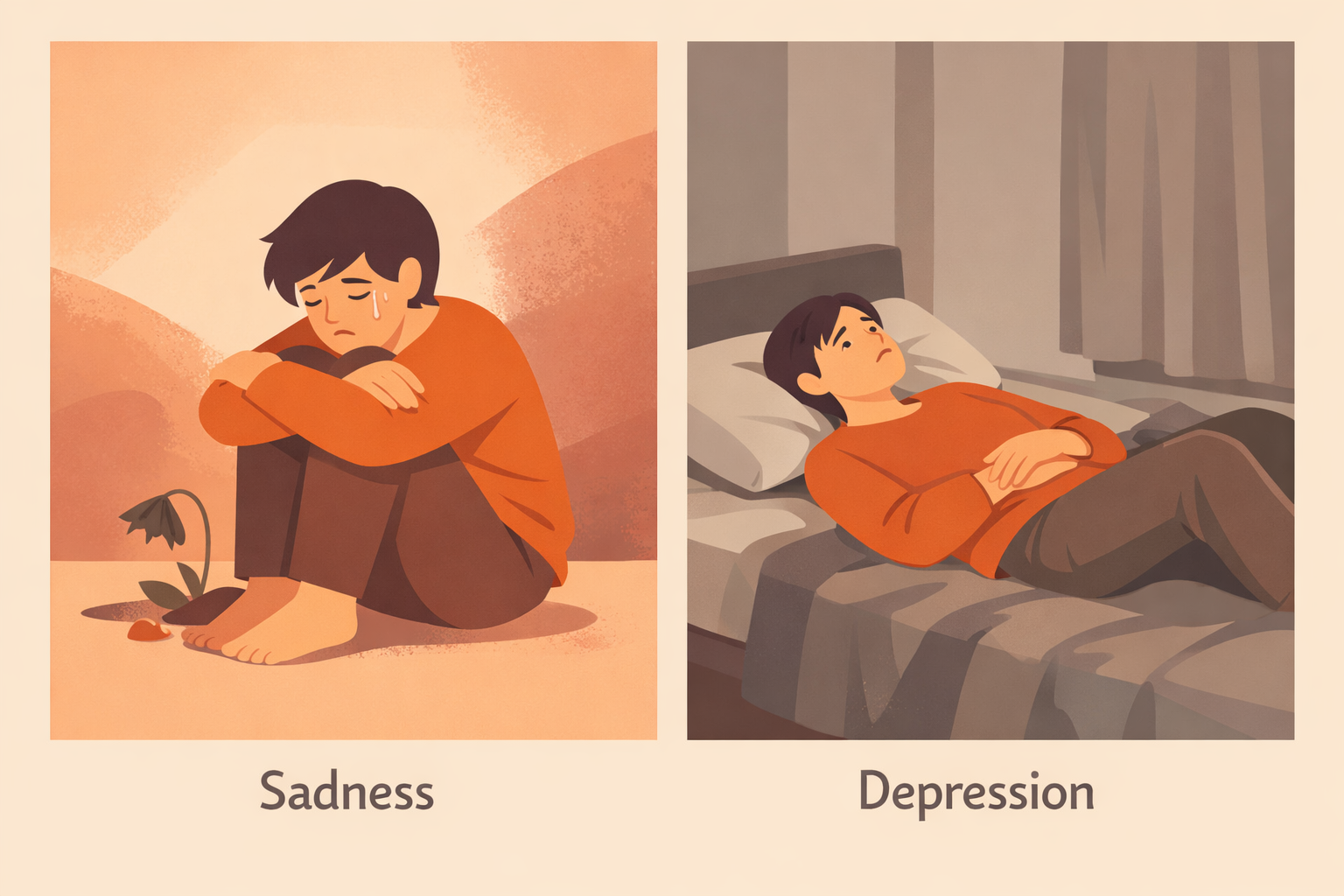
Sadness is a normal emotional response. It shows up after loss, disappointment, conflict, or any moment where something meaningful doesn't go the way you hoped. It's uncomfortable, sometimes deeply so, but it serves a purpose - it helps you process and eventually adapt.
A few things that characterise normal sadness:
• It has an identifiable trigger - a breakup, a death, a failure, a rejection.
• It tends to come in waves rather than sitting as a flat, constant weight.
• It usually eases within days or a couple of weeks.
• You can still feel moments of connection, humour, or relief in between.
• Your sense of self-worth stays mostly intact.
Even intense grief - after losing someone you love - is not depression. It's grief. Painful and disorienting, but not the same as a depressive episode. The difference lies in what happens over time and whether the emotional pain starts to affect your ability to function.
What Depression Actually Is
Depression isn't just a deeper version of sadness. It's a clinical condition that changes how the brain functions, affecting mood, cognition, energy, sleep, appetite, and physical sensation. According to the World Health Organization, depression affects more than 280 million people worldwide and is one of the leading causes of disability globally.
The most important word in clinical depression is persistent. It doesn't lift after a few days. It doesn't respond to a good night's sleep or a distraction. And often - this is the part that catches people off guard - it doesn't have an obvious cause.
Someone can be living what looks like a perfectly functional life and still be clinically depressed. That invisibility is exactly what makes it so frequently missed.
Signs of Depression Most People Miss
The classic image of depression - someone who stays in bed and cries all day - is only one version of it. Many people with depression remain functional on the outside while quietly struggling in ways that don't look like what they expected.
Emotional Numbness Instead of Sadness
Many people with depression don't feel intensely sad. They feel nothing. A flatness. An inability to care about things they used to love. This anhedonia - the loss of pleasure or interest - is one of the two core diagnostic criteria for depression, and it's frequently overlooked because it doesn't look "sad enough."
Irritability and Low Frustration Tolerance
Particularly common in men and adolescents, depression often presents not as tearfulness but as short temper, snapping at people, or a persistent low-grade anger that seems disproportionate to the situation. If you've noticed this pattern persisting for weeks, it's worth paying attention.
Physical Symptoms With No Clear Medical Cause
Depression is not purely psychological. It frequently manifests as chronic fatigue, unexplained physical pain, digestive issues, and changes in appetite or weight. People often end up at a GP's office for these physical symptoms before anyone considers depression as a cause. This connection between body and emotion is explored in depth in Chronic Stress: 12 Hidden Signs Your Body Is Screaming for Help.
Difficulty Concentrating and Making Decisions
Brain fog, forgetfulness, and an unusual inability to make even small decisions are common signs of depression that people often attribute to stress or burnout. When this cognitive slowness persists alongside low mood or reduced motivation, it's a meaningful signal.
Social Withdrawal That Feels Different From Introversion
Wanting quiet time is normal. Gradually pulling away from everyone, cancelling consistently, and feeling a kind of dread around socialising you once enjoyed - that's different. Depression often erodes connection in slow, barely noticeable increments.

When Does Sadness Become Depression?
Clinically, a diagnosis of major depressive disorder requires symptoms to be present most of the day, nearly every day, for at least two weeks. But that two-week threshold isn't a magic cutoff - it's a minimum. Many people live with untreated depression for months or years before they recognise it for what it is.
The more useful question isn't "how long has this been going on" but rather: Is this affecting my ability to function? My relationships? My sense of self?
If the answer is yes - and especially if you've found yourself wondering why you feel sad when nothing seems wrong - that experience of sadness with no apparent cause is itself one of the diagnostic flags that distinguishes depression from situational low mood.
What To Do When You're Not Sure
If you're genuinely unsure what you're experiencing, a few practical steps can help:
• Track your mood over 1-2 weeks. Not obsessively - just a brief daily note on your general state.
• Notice whether there are moments of genuine relief, laughter, or connection. Sadness allows for these; depression often dulls them.
• Ask yourself whether your daily functioning has changed - work, relationships, basic self-care.
• Talk to your GP or a mental health professional. You don't need to be certain before you reach out.
It's also worth noting that overthinking tends to amplify emotional uncertainty at night - the hours between midnight and 3am are when the question "is this depression?" tends to spiral most unproductively. A morning assessment is often more accurate.
When to Seek Professional Support
You don't need to hit a crisis point to deserve help. If your low mood has lasted more than two weeks, is affecting your relationships or work, or you're having thoughts of hopelessness or worthlessness - speaking to a professional is the appropriate step, not an overreaction.
In the UK, you can self-refer to NHS Talking Therapies. In the US, the SAMHSA National Helpline (1-800-662-4357) provides free, confidential support. In Australia, Beyond Blue (beyondblue.org.au) offers both online and phone resources.
If you're supporting someone else and noticing these signs, the way you approach that conversation matters enormously. The principles in How Can Couples Talk Without Turning Conversations Into Arguments apply equally here - the goal is to open a door, not to diagnose.
Knowing the Difference Changes What You Do Next
Sadness is part of being human. It asks for time, gentleness, and space to move through. Depression is something different - it asks for support, often professional, and it doesn't resolve on its own with willpower or distraction.
The difference between sadness and depression isn't always obvious from the inside. But the signs are there if you know what to look for: the duration, the impact on functioning, the presence of physical symptoms, the loss of pleasure rather than just the presence of pain.
If anything in this post resonated with your own experience, that's information worth taking seriously. You don't need to be certain. You just need to be willing to ask.


