

The Illusion of Knowing: Why We Think We Understand Things We Don't
Quick question: Can you explain how a toilet works? Not just I flush it and the water goes down - but the actual mechanism. The valve. The float. The siphon.
If you are like most people, you probably paused. You thought you knew how a toilet works - until the moment you were asked to explain it. That gap between what you think you know and what you can actually articulate is called the illusion of explanatory depth, and it is one of the most pervasive cognitive biases in human thinking.
The broader phenomenon - the illusion of knowing - goes beyond mechanical objects. It shows up in politics, relationships, work, and nearly every domain where you assume understanding without ever testing whether that understanding is real. And the cost is higher than you might think.
What the Illusion of Knowledge Actually Is
The illusion of knowledge is the gap between how much you think you know and how much you actually know. It is not stupidity. It is a quirk of how human cognition works.
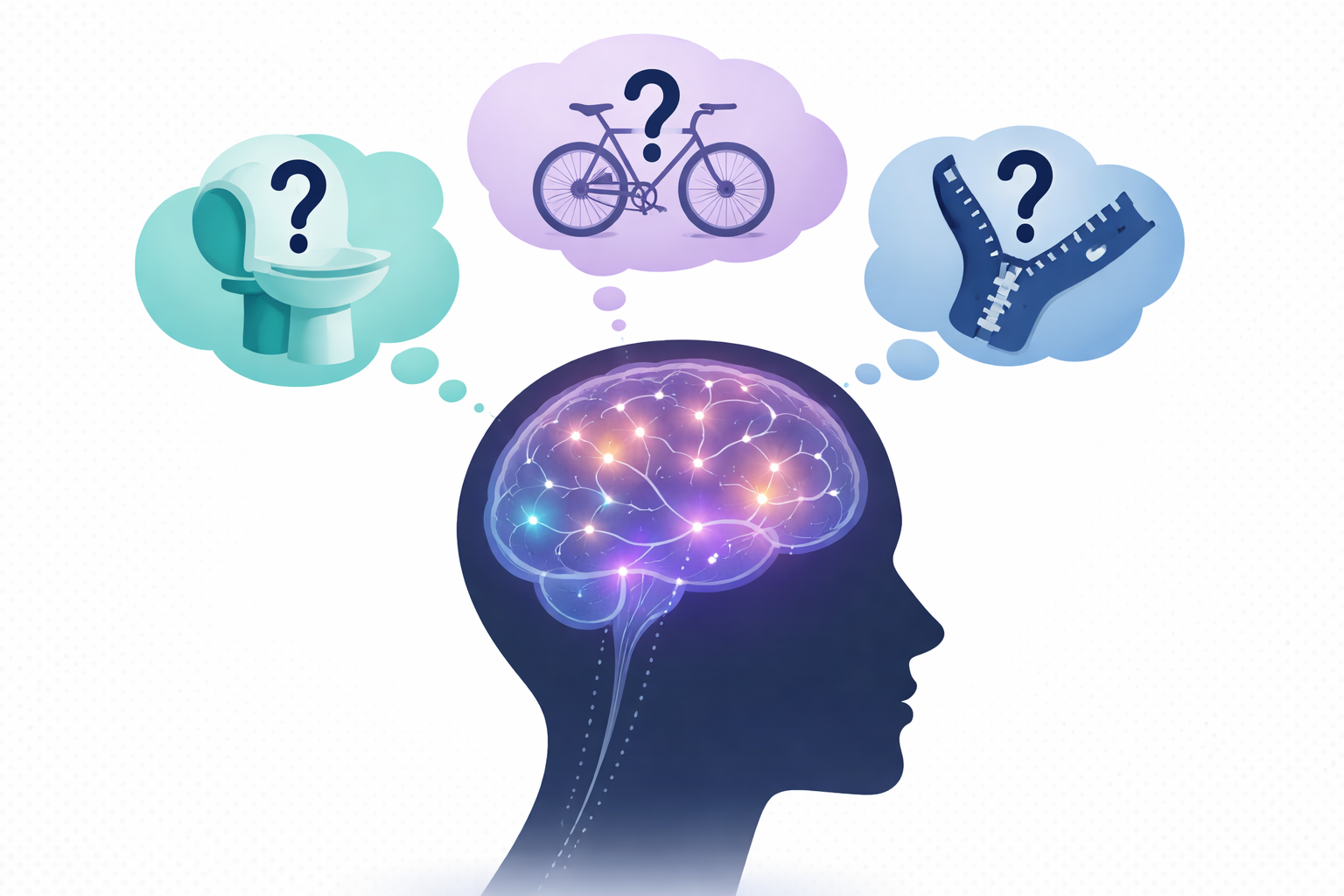
Psychologists Frank Keil and Leonid Rozenblit famously demonstrated this with everyday objects. They asked people to rate their understanding of how things like zippers, toilets, and bicycles work. Most people rated themselves quite confident. Then they asked participants to actually explain the mechanisms step-by-step. Confidence plummeted. People realized they had been operating with what Keil calls shallow knowledge - a vague sense of familiarity without real comprehension.
This is not limited to objects. Research shows the same pattern in politics, economics, science, and social issues. People are confident they understand complex systems until they are asked to explain them. Then the illusion collapses.
Why Your Brain Creates This Illusion
The illusion of knowledge is not a bug. It is a feature of how your brain manages information efficiently. But that efficiency comes with blind spots.
1. Familiarity Feels Like Understanding
Your brain uses fluency - how easily information comes to mind - as a shortcut for knowledge. If you have heard of something many times, if it feels familiar, your brain interprets that ease as understanding.
This is why you might feel like you understand cryptocurrency or climate change after reading a few headlines. The terms are familiar. The concepts feel accessible. But if someone asked you to explain the underlying mechanisms, you would quickly hit a wall.
2. You Mistake Access for Ownership
You live in a world where information is externalized. Google knows how toilets work. Wikipedia knows how the stock market works. Your brain, recognizing this, does not bother storing detailed explanations - it just stores the fact that the information exists somewhere.
But here is the trick: your brain feels like it knows the information because it knows where to find it. The boundary between knowledge in your head and knowledge in the world blurs. This is sometimes called the Google effect or transactive memory - and it inflates your sense of personal understanding.
3. Abstract Knowledge Hides Gaps
You can hold abstract knowledge without deep understanding. You might know that gravity pulls objects toward each other without being able to explain why mass creates gravitational force. You might know democracy is important without being able to describe how electoral systems actually function.
Abstract understanding is useful for conversation. But it is not the same as explanatory depth - and your brain does not always flag the difference.
The Dunning-Kruger Effect: A Related Phenomenon
The illusion of knowing overlaps with but is distinct from the Dunning-Kruger effect - the tendency for people with low competence in a domain to overestimate their ability.
The key difference: the illusion of explanatory depth affects everyone, even experts. You can be highly knowledgeable in one area and still overestimate how well you understand related concepts. Dunning-Kruger is about skill. The illusion of knowledge is about the gap between perceived and actual understanding.
Both share a common root: poor metacognition - the inability to accurately assess what you know and what you do not know. This connects to how we make decisions under pressure - when you are confident in faulty knowledge, your decisions reflect that confidence, not reality.
Where the Illusion Shows Up in Real Life
The illusion of knowledge is not just an academic curiosity. It has real consequences.
In Political Opinions
Research shows that people who hold the strongest political opinions often have the shallowest understanding of the policies they defend. When asked to explain how their preferred policies would work in practice, confidence drops and positions moderate.
This is not about intelligence. It is about the illusion of explanatory depth. You absorb talking points, form strong feelings, and mistake emotional conviction for substantive knowledge.
In Professional Expertise
Even experts fall prey to this. A doctor might be highly knowledgeable about cardiology but overestimate their understanding of a rare neurological condition. A software engineer might be confident explaining an algorithm they have never actually implemented.
The danger is that expertise in one area inflates your confidence across domains. You stop questioning whether you actually know what you think you know.
In Relationships
You assume you understand why your partner is upset. You assume you know what your friend needs. But when pressed to explain the situation from their perspective - not just your interpretation of it - you realize your understanding is far more limited than you thought. This pattern is explored in why smart people still struggle in relationships.
In Everyday Problem-Solving
You think you know how to fix something until you try. You think you understand a process until you have to teach it. The illusion of knowledge makes you overconfident in your ability to execute, which leads to poor planning, unrealistic timelines, and frustration when reality does not match expectation.
How to Test Whether You Actually Understand Something
The good news is that the illusion of knowledge collapses the moment you test it. Here are practical ways to check your understanding.
1. Try to Explain It to Someone Else
Teaching forces you to articulate what you know. If you cannot explain it clearly to someone unfamiliar with the topic, you do not understand it as well as you think. This is the Feynman Technique - named after physicist Richard Feynman, who believed that if you cannot explain something in simple terms, you do not really understand it.
2. Write It Out Step-by-Step
Take a concept you are confident you understand and write out a detailed explanation without looking anything up. Where do you get stuck? Where do you have to fill in gaps with vague language? Those are the spots where your understanding is shallow.
3. Ask Yourself: Could I Rebuild This From Scratch?
This is a useful mental test for procedural knowledge. If the instructions disappeared, could you recreate them? If the tool broke, could you fix it? If not, you are relying on external structure more than internal understanding.
4. Seek Out Counterarguments
If you hold a strong opinion on something, can you articulate the best argument against your position? If not, you probably do not understand the issue as deeply as you think. Real understanding includes knowing why reasonable people might disagree.

How to Reduce the Illusion of Knowledge
You cannot eliminate the illusion of knowing entirely - it is baked into how cognition works. But you can develop habits that make you more aware of it.
Cultivate Intellectual Humility
Intellectual humility is the recognition that your knowledge is limited and provisional. It does not mean doubting everything - it means holding your beliefs lightly enough to update them when evidence shifts. This is explored further in how emotional understanding builds deeper connections - the willingness to admit you might be wrong strengthens relationships and critical thinking alike.
Distinguish Between Familiarity and Mastery
When you encounter a concept, ask: Do I actually understand this, or do I just recognize it? Can I explain it, or can I only nod along when someone else does?
Embrace the Phrase 'I Don't Know'
Most people avoid saying they do not know something because it feels like admitting ignorance. But saying I do not know is often the most intellectually honest response - and it opens the door to actually learning instead of pretending.
Test Your Understanding Regularly
Make it a habit to periodically check whether you can still explain the things you claim to know. Understanding degrades over time if it is not actively maintained. What you understood six months ago might now be shallow knowledge you have not revisited.
The Cost of Overconfidence
The illusion of knowing is not just a harmless quirk. It has measurable consequences.
When you overestimate your understanding, you:
• Make decisions based on incomplete or faulty information.
• Become resistant to new evidence that contradicts your shallow knowledge.
• Stop asking questions because you assume you already know the answers.
• Miss opportunities to learn because you do not recognize the gaps in your knowledge.
• Damage credibility when your confident assertions turn out to be wrong.
The paradox is that the people most affected by the illusion of knowledge are often the least aware of it. If you are certain you understand something, that certainty itself might be the signal that you should test your understanding more carefully.
Knowing What You Don't Know
The illusion of knowing is one of the most humbling realizations in cognitive psychology. It reveals that much of what you think you know is actually shallow familiarity, outsourced memory, or abstract concepts you have never truly examined.
But awareness is the first step. Once you recognize that your brain substitutes fluency for understanding, you can start testing your knowledge more rigorously. You can ask better questions. You can hold your opinions more lightly. You can admit when you do not know - and mean it.
The goal is not to achieve perfect knowledge of everything. That is impossible. The goal is to close the gap between what you think you know and what you actually know - so that when it matters, your confidence is grounded in substance, not illusion.


